

12 Month Medicare Advantage Trial Right for U.S. Seniors: Act Now
If you enrolled in Medicare Advantage when you first became eligible, or you dropped a Medigap policy to try Medicare Advantage for the first time, you have 12 months to change your mind. That trial right lets you return to Original Medicare and buy a Medigap policy with guaranteed-issue protection, meaning no insurer can deny you or charge more for health conditions you already have. You need to apply within a specific window tied to when your Medicare Advantage coverage ends, so timing matters as much as eligibility.
TL;DR:
- The 12-month trial right to switch back to Original Medicare and buy a Medigap policy begins from your initial Medicare Advantage enrollment or disenrollment, not from any later date.
- You must apply for Medigap within 60 days before your plan ends or within 63 days afterward to avoid medical underwriting and ensure guaranteed-issue protection.
- Your state and specific circumstances can expand your guaranteed-issue rights or limit available Medigap plans, so local resources like SHIP and insurance departments are valuable.
- Enrolling in standalone Part D drug coverage is essential when returning to Original Medicare, as Medigap policies do not include prescription benefits.
- Accurate timing, documentation, and working with knowledgeable agents help ensure your guaranteed issue rights are protected throughout the process.
Core Insurance SolutionsGet Guidance For Your Medicare DecisionCore Insurance Solutions provides personalized Medicare guidance, plan comparisons, prescription cost assistance, and claims advocacy for seniors in Lakeland.Visit Core Insurance Solutions
Table of Contents
- Who Qualifies for a Medicare Advantage Trial Right?
- What Guaranteed-Issue Protection Actually Means
- When Exactly Can You Apply? The 60-Day and 63-Day Rule
- How to Exercise Your Trial Right, Step by Step
- Which Medigap Plans Can You Actually Buy Back?
- How Do State Rules Affect Your Trial Right?
- How Core Insurance Solutions Helps You Use Your Trial Right Correctly
- Get Help Returning to Original Medicare and Buying Medigap
- Sources
- FAQ
Who Qualifies for a Medicare Advantage Trial Right?
Two situations trigger a trial right, and CMS treats them as separate 12-month clocks that each start the day the qualifying event happens.
- You joined a Medicare Advantage or PACE plan the very first time you became eligible for Medicare, commonly at age 65, and now want to switch to Original Medicare.
- You had a Medigap policy, dropped it to try Medicare Advantage for the first time, and want that protection back.
Either way, the 12-month trial right runs from the date you first enrolled, not from some later date you decide you’re unhappy. That’s a different clock entirely from the Medicare Advantage Open Enrollment Period, which runs January 1 through March 31 every year and lets you switch plans regardless of health history but does not guarantee Medigap acceptance.
What Guaranteed-Issue Protection Actually Means
Guaranteed issue is the whole point of the trial right. It means a Medigap insurer cannot reject your application, delay your start date, or charge you a higher premium because of a preexisting condition, even something like recent cancer treatment or a cardiac event.
If you had a Medigap policy before switching to Medicare Advantage, you can typically buy that exact same policy back from the same insurer if it’s still sold. When it isn’t available anymore, Medicare explains you can usually buy certain other Medigap plans sold in your state instead.
Trial right at a glance:
- Length of protection: a 12-month period from your qualifying enrollment or disenrollment date
- What it guarantees: Medigap acceptance without medical underwriting
- What it doesn’t guarantee: your original premium rate or every plan letter being sold in every state
You can also enroll in a standalone Part D drug plan when you go back to Original Medicare, which matters because Medicare Advantage plans typically bundle drug coverage in, and Original Medicare does not.
When Exactly Can You Apply? The 60-Day and 63-Day Rule
The application window is precise, and missing it can cost you your guaranteed-issue protection entirely.
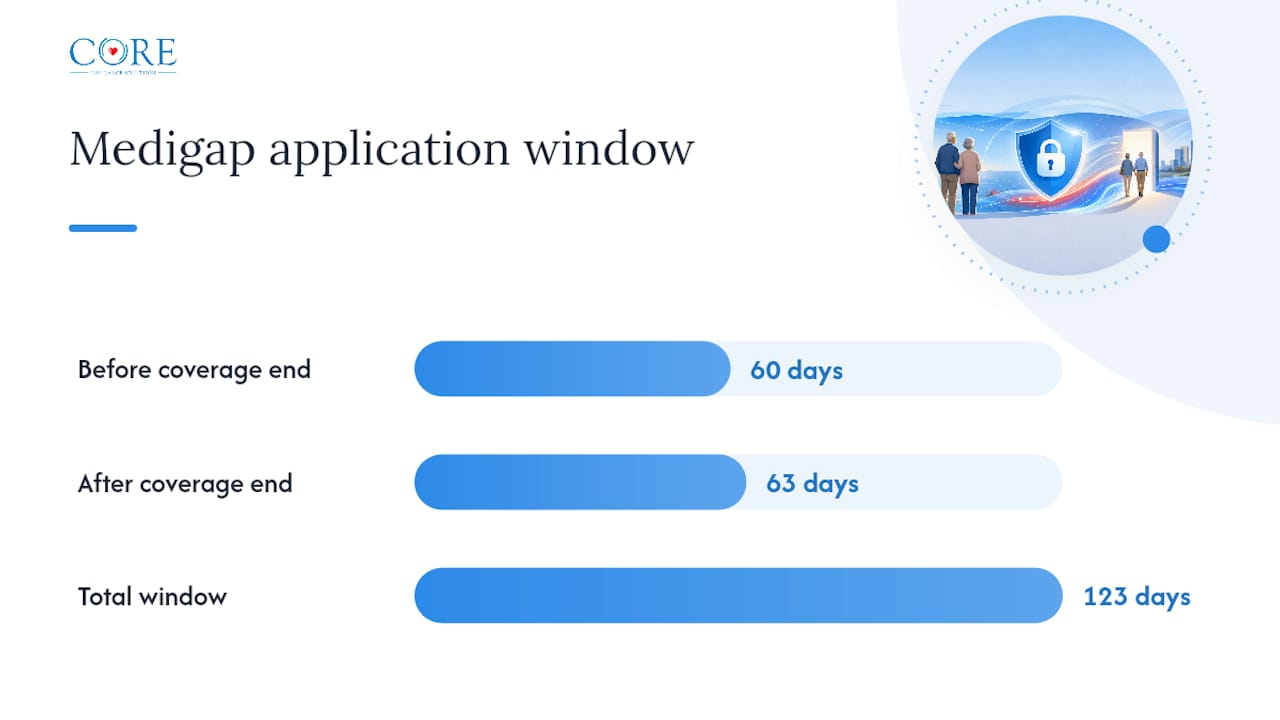
- You can apply for Medigap starting 60 days before your Medicare Advantage coverage is scheduled to end.
- You have until 63 days after your Medicare Advantage coverage ends to submit your Medigap application.
- Both dates fall within your overall 12-month trial right window, so plan backward from your enrollment anniversary.
Here’s how that plays out: if your Medicare Advantage coverage ends on June 30, you can start your Medigap application as early as May 1, and your absolute deadline is September 1 (63 days after June 30). Miss that date, and the insurer can require medical underwriting, which means your health history is fair game for pricing or denial.
If you believe you missed the window because of a plan error or a delayed notice, don’t assume you’re out of options. State Insurance Departments sometimes recognize exceptions for documented insurer mistakes, but you need to raise it quickly.
How to Exercise Your Trial Right, Step by Step
Exercising a trial right is a paperwork sequence, not a phone call you make once and forget. Miss a step and you risk losing guaranteed issue even if you’re technically still inside the window.
- Notify your Medicare Advantage plan and disenroll. Call the plan directly or contact 1-800-MEDICARE, and get written confirmation of your disenrollment date.
- Confirm your return to Original Medicare. In most cases this happens automatically once you disenroll from Medicare Advantage, but verify it shows correctly before moving forward.
- Apply for Medigap within your window. Submit your application as early as 60 days before your coverage ends or no later than 63 days after, and explicitly state you are exercising a guaranteed-issue trial right on the application itself.
- Enroll in a Part D plan if you need drug coverage. Do this promptly to avoid a late-enrollment penalty that follows you for as long as you have Part D.
Pro Tip: Keep a paper or digital folder with your disenrollment confirmation letter, the date you mailed or submitted your Medigap application, and the name of every representative you spoke with. If an insurer disputes your guaranteed-issue status later, that documentation is your evidence.
Which Medigap Plans Can You Actually Buy Back?
What’s on the table depends partly on when you first became eligible for Medicare and partly on your state.
- If you were eligible for Medicare before January 1, 2020, you may have access to Plans C or F, which cover the Part B deductible.
- If you became eligible on or after January 1, 2020, those plans are closed to you, and Plans D or G are the closest equivalents without the deductible coverage.
- Exact plan letters sold, and their guaranteed-issue eligibility, vary by state, so what your neighbor got approved for isn’t a guarantee for you.
Once you’re back on Original Medicare, you’ll also want Part D coverage in place, since Medigap policies don’t include prescription drug benefits. Enroll in a standalone Part D plan around the same time you finalize your Medigap application so there’s no coverage gap and no penalty clock ticking against you.
How Do State Rules Affect Your Trial Right?
Guaranteed-issue rules are federal at the core, but some states expand on them, and plan availability differs by carrier and by state insurance market.
- Your State Health Insurance Assistance Program (SHIP) offers free, unbiased counseling and can confirm what’s true for your specific state.
- Your State Insurance Department regulates which Medigap plans are actually sold locally and can tell you if your state extends trial rights beyond the federal minimum.
- Before you call either one, have your Medicare Advantage enrollment date, disenrollment confirmation, and current Medigap policy number (if you had one) ready.
Ask directly whether your state offers additional guaranteed-issue periods and whether your specific Medigap plan letter is currently sold. If a SHIP counselor can’t answer a plan-availability question, that’s when to escalate to the Centers for Medicare & Medicaid Services (CMS) or the state insurance regulator directly.
How Core Insurance Solutions Helps You Use Your Trial Right Correctly
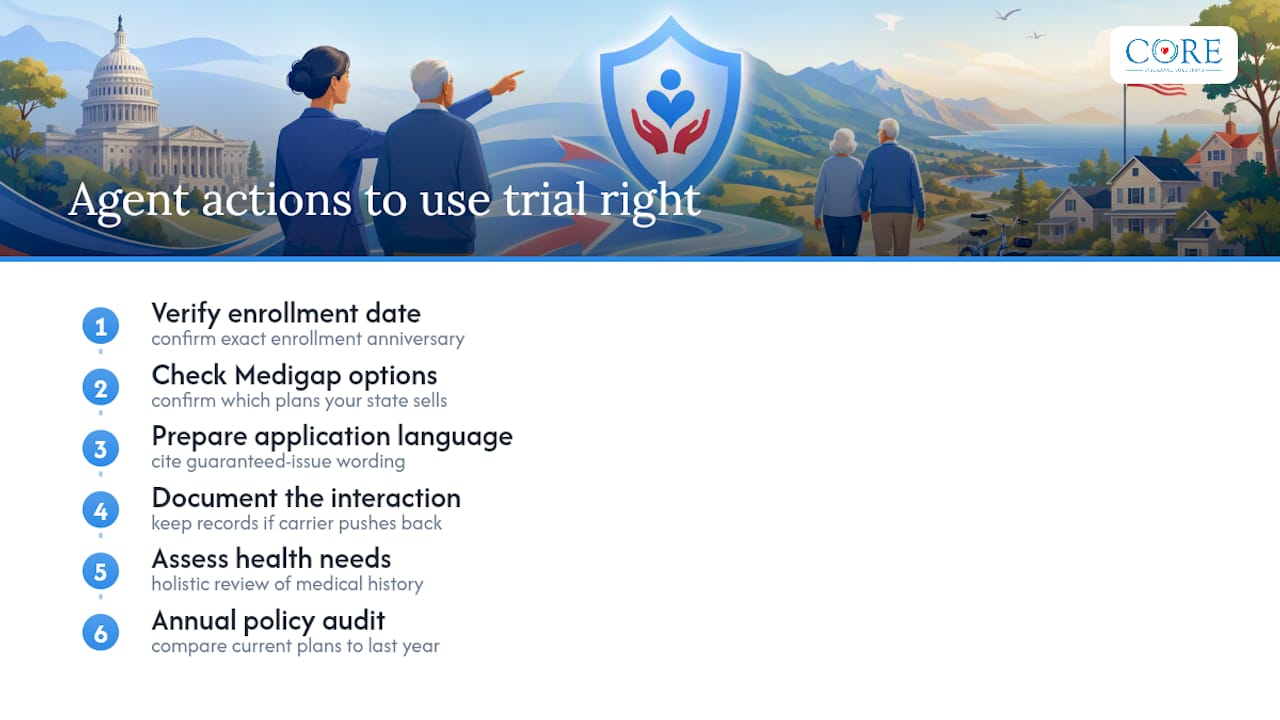
A trial right protects you on paper, but it only works if the paperwork happens in the right order and on the right dates. That’s where an agent earns their keep: verifying your exact enrollment anniversary, confirming which Medigap plans your state actually sells, preparing the application language that cites your guaranteed-issue status, and keeping a documented record in case a carrier pushes back.
Insurance agents can guide families through Medicare decisions using a holistic health needs assessment and unbiased comparisons across major carriers, so recommendations are based on individual medical history rather than generic scripts. Annual policy audits mean the plan that fit you last year gets checked against what’s available today, which matters if your health or your prescriptions have changed since you first enrolled.
— Core Insurance Solutions
Get Help Returning to Original Medicare and Buying Medigap
Some insurance agencies handle the process described here: confirming trial-right eligibility, timing disenrollment correctly, and preparing Medigap applications that clearly state guaranteed-issue status to insurers.

If you’re within your 12-month window and want a second set of eyes before you submit anything, start with the Medicare 101 free webinar replay, which walks through enrollment timing and plan choices at your own pace. Rules and plan availability vary by state and by individual circumstance, so confirm your specific eligibility before making a final decision, and reach out any time you want that confirmation done for you rather than by yourself.
Sources
This article is general information, not a substitute for advice from a qualified financial advisor. Consult a qualified financial professional about your own circumstances before acting on anything here.
FAQ
What Did Recent Policy Changes Do to Medicare Advantage Plans?
Federal oversight of Medicare Advantage has tightened in recent years around marketing practices, prior authorization transparency, and audit enforcement, but your 12-month trial right to return to Original Medicare remains intact regardless of these changes. Always confirm current plan terms directly with Medicare.gov or your carrier, since benefit details do shift year to year.
What Is Happening to Medicare Advantage Plans in 2026?
Plan benefits, provider networks, and premiums are reviewed annually and can change from one year to the next, which is why annual policy audits matter even for people happy with their current coverage. Check your Annual Notice of Change each fall, or work with an agent who reviews it for you.
Which Medicare Advantage Plan Has the Most Denials?
Denial rates vary by carrier, plan, and even by region, and no single trial-right source ranks plans by denial frequency, so treat any specific ranking you see elsewhere with caution. If claims denials concern you, ask directly about a plan’s prior authorization and appeal statistics before enrolling.
Why Do People Say to Stay Away From Medicare Advantage Plans?
Most of the criticism centers on provider network restrictions and prior authorization requirements that Original Medicare doesn’t impose, not on Medicare Advantage being universally worse. Your trial right exists precisely so you can test the plan for up to 12 months and switch back to Original Medicare with Medigap if it isn’t the right fit.
Can I Get Help Understanding My Trial Right Options?
Yes. Core Insurance Solutions offers personalized guidance to confirm your trial-right eligibility and walk through the Medigap application process step by step, and current service details are on their services page.


