

$2,950 High Deductible Medigap Plan G in Florida: Who It Helps in 2026
Medigap Plan G pays nearly every out-of-pocket gap Original Medicare leaves behind, except the Part B deductible, which sits at a modest fixed amount each year. For Florida residents who see specialists often, travel out of state, or simply want to stop guessing what a hospital bill will cost, Plan G is typically the strongest standardized option available to anyone who became Medicare-eligible after January 1, 2020. The right next step is comparing carrier rates for your ZIP code and talking to a licensed agent before you sign anything.
TL;DR:
- Plan G covers nearly all Medicare gaps except the Part B deductible, which is a fixed annual cost that varies slightly each year.
- Carriers in Florida must offer identical benefits for Plan G, but premiums differ based on rating methods such as community-rated, issue-age-rated, or attained-age-rated.
- For most retirees, the choice between Plan G and Plan N depends on their doctor visit frequency and risk tolerance, with travelers favoring Plan G due to fewer surprise bills.
- Rate increases and premium stability over time hinge on the insurer’s rating method and historical increases, making personalized quotes and rating history essential before enrolling.
- Florida law offers consumer protections like guaranteed-issue rights during specific enrollment periods and requires insurers to file rates and policies with state regulators.
Table of Contents
- What Does Medigap Plan G Cover in Florida?
- Plan G vs. Plan N: Which Costs Less Over a Year?
- How Much Does Plan G Cost in Florida?
- How Do You Enroll in Plan G in Florida?
- Who Actually Comes Out Ahead With Plan G?
- Florida Rules That Protect Medigap Buyers
- How Core Insurance Solutions Helps Florida Seniors Pick the Right Plan
- Why the Plan G vs. Plan N Debate Misses the Point
- Get Your Florida Medigap Questions Answered Before You Enroll
- Sources
What Does Medigap Plan G Cover in Florida?
Plan G is one of ten standardized Medigap plans sold nationwide, and Florida carriers must offer the exact same benefit structure as insurers in Ohio or Texas. Price and service are where companies compete. The benefits themselves never change from one insurer to the next.
Here’s what a standard Plan G policy pays for, according to Medicare’s own standardized-plan comparison chart:
- Part A deductible — fully covered, so a hospital stay won’t trigger that upfront cost.
- Part A hospital coinsurance and hospital costs — covered for an extra 365 days after Medicare benefits run out.
- Part B coinsurance or copayment — the standard 20% you’d otherwise owe on doctor visits and outpatient care.
- Part B excess charges — covered in full, which matters if your doctor doesn’t accept Medicare’s approved amount.
- Skilled nursing facility coinsurance — covered for days 21 through 100.
- Blood — the first three pints each year.
- Hospice care coinsurance or copayment — covered.
- Foreign travel emergency care — covered up to plan limits, useful for Florida retirees who spend winters abroad or take cruises out of Miami.
The one gap Plan G doesn’t fill is the Part B deductible, which you pay before Medicare starts covering its share of outpatient costs.
Some Florida insurers also sell a high-deductible Plan G. You pay a set amount out of pocket first, $2,950 in 2026, before the policy pays anything. Once you hit that number, coverage works exactly like standard Plan G. It’s a way to trade a much lower monthly premium for more risk upfront, and it usually makes sense only if you’re healthy and rarely see a doctor.
Plan G vs. Plan N: Which Costs Less Over a Year?
The real fork in the road for most Florida shoppers is Plan G against Plan N, since both cover the big-ticket items like hospital stays and skilled nursing. The difference shows up in the smaller, more frequent costs.
- Part B coinsurance. Plan G pays the full 20% Medicare doesn’t cover. Plan N leaves you responsible for copays of up to $20 for many office visits and up to $50 for ER visits that don’t result in admission.
- Part B excess charges. Plan G covers these completely. Plan N does not, so if your doctor is one of the small number in Florida who charge above Medicare’s approved rate, you’re on the hook for the difference.
- Premium. Plan N typically runs cheaper per month than Plan G, since the insurer expects to pay out less over the year.
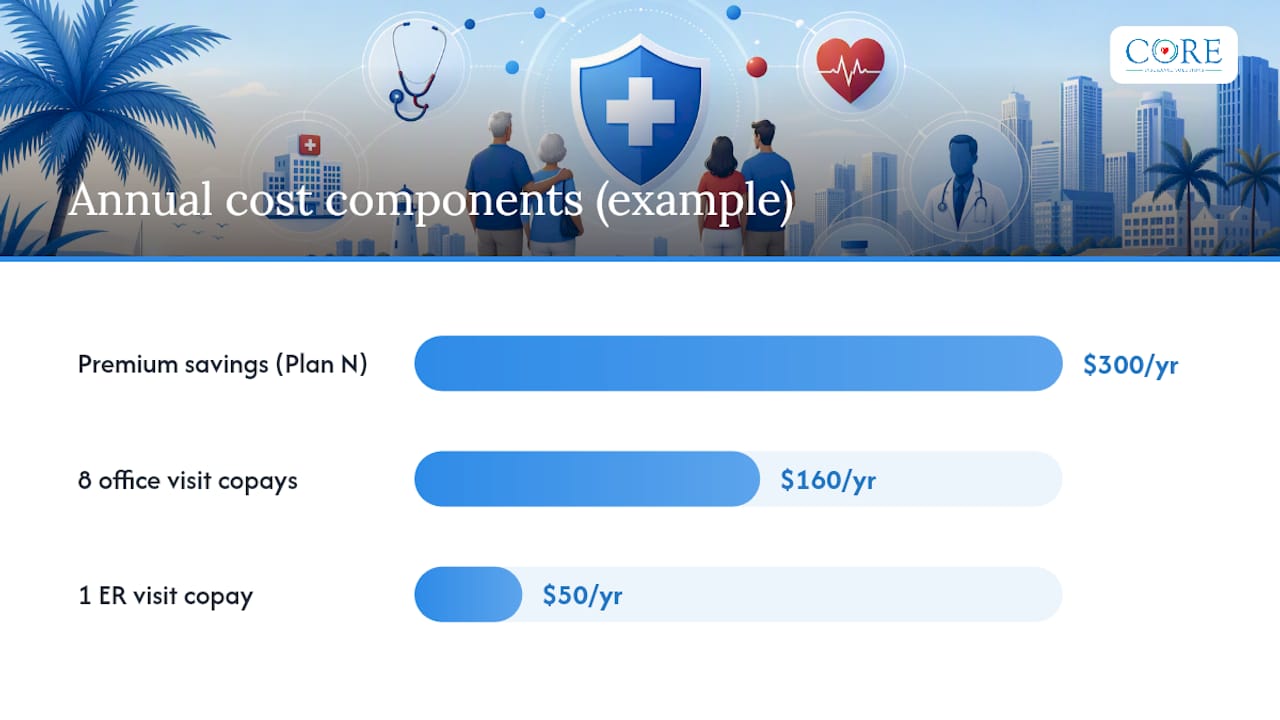
Here’s the break-even math in practice. If Plan N saves you $25 a month over Plan G, that’s $300 a year in premium savings. But if you see your doctor for eight office visits a year at $20 each, that’s $160 in copays Plan G would have absorbed. Add one ER visit at $50, and you’re at $210. Suddenly the $300 premium gap has mostly evaporated, and one unexpected specialist visit with an excess charge could flip the math entirely in Plan G’s favor.
Retirees who travel frequently within Florida or see multiple specialists tend to come out ahead with Plan G, especially since very few Florida providers still charge excess fees, but the ones that do can hand you a surprise bill under Plan N.
How Much Does Plan G Cost in Florida?
Florida premiums for the same Plan G benefits can vary by hundreds of dollars a year depending on which insurer you pick, because carriers use different rating methods to set prices:
- Community-rated — everyone in the area pays the same premium regardless of age.
- Issue-age-rated — your premium is locked in based on your age when you buy the policy and doesn’t increase just because you get older.
- Attained-age-rated — often starts cheaper but rises every year as you age, sometimes substantially by your late 70s.
Attained-age policies almost always look like the better deal at 65 and often become the more expensive option by 80. That’s the tradeoff worth asking about before you commit to a low starting rate.
Insurers selling Medigap in Florida must file their rate schedules with the Florida Office of Insurance Regulation and get approval before changing premiums, which gives the state a real check on pricing rather than leaving it entirely to the market.
For actual numbers, the FOIR Medicare Supplement Rates search tool publishes state-validated sample rates by carrier and plan letter, though the tool doesn’t always reflect every filing update the moment it’s approved. Treat it as your starting baseline, not the final word, and confirm with a personalized rate quote for your specific ZIP code, age, gender, and tobacco status, all of which move the premium.
Pro Tip: If you’re comparing quotes from three carriers with identical Plan G benefits, ask each one for its rate-increase history over the past five years. A cheaper starting rate with a pattern of steep annual hikes can cost you more by year three than a slightly higher rate that’s stayed flat.
How Do You Enroll in Plan G in Florida?
Timing decides almost everything about how much underwriting you face when buying Medigap. Florida residents get their strongest buying position during a specific six-month window, and missing it can mean medical questions standing between you and a policy.
- Confirm your Medigap Open Enrollment Period. This six-month window starts the day your Part B coverage becomes effective, and during it insurers can’t deny you coverage or charge more for health conditions.
- Check for guaranteed-issue rights. Certain situations, like losing employer coverage or a Medicare Advantage plan leaving your area, trigger guaranteed-issue protections even outside that window, as outlined in Medicare’s Medigap buyer’s guide.
- Gather your documents. You’ll need your Medicare card and Part A/B effective dates handy when you request quotes.
- Request an outline of coverage from each insurer you’re considering, and compare rating methods side by side, not just the sticker premium.
- Use your 30-day free-look period after enrolling to confirm the policy fits before you drop any prior coverage.
- Keep copies of everything you sign, including the application and outline of coverage, in case a dispute comes up later.
Outside guaranteed-issue situations, insurers can ask medical history questions and decline or upcharge based on your health. That’s exactly the moment a personalized review from a licensed agent pays off, since they can flag which carriers are likely to underwrite you favorably before you apply and risk a denial on your record.
Who Actually Comes Out Ahead With Plan G?
The decision usually comes down to three things: how often you see doctors, how much unpredictability you can tolerate, and whether you’d rather pay more now for fewer surprises later.
Consider two Florida retirees. The first sees her primary care doctor twice a year and takes no regular medications beyond a generic blood pressure prescription. Her low usage means Plan N’s copays would cost her maybe $40 a year, well under any premium gap with Plan G. The second has type 2 diabetes, sees an endocrinologist quarterly, and had a hospital stay last year. His annual out-of-pocket exposure under Plan N, factoring copays and the small chance of an excess charge from a specialist, easily runs past $200, likely erasing any premium savings.
Ask any insurer or agent these questions before choosing:
- What’s this carrier’s average rate increase over the past five years?
- Does this rating method mean my premium rises automatically as I age?
- Are there any local specialists I see who are known to charge above Medicare’s approved amount?
If your honest answer to “how often do I see doctors” is “more than a couple times a year,” Plan G’s flat, no-surprises structure tends to be worth the higher premium. Readers managing ongoing supply costs, like diabetic testing equipment, can also check what qualifies for diabetic supply payment in Florida to understand how those costs interact with Medicare and Medigap coverage.
Florida Rules That Protect Medigap Buyers
Florida backs up federal Medigap standardization with its own layer of consumer protection, and knowing these rules helps you spot when something’s off with an offer.
State law requires every insurer selling Medigap in Florida to file its policy forms and rate schedules with the Florida Office of Insurance Regulation for approval before selling or changing rates, and the statute also bars unfair discrimination in how those rates get applied. Practically, that means:
- You get a free-look period on every new policy, letting you cancel for a full refund if it doesn’t fit.
- Insurers must give you a written outline of coverage before you buy, spelling out exactly what’s included.
- The FOIR Choices sample-rate tool lets you check approved rates by carrier, though it’s a starting reference rather than a real-time quote engine.
- Florida’s Serving Health Insurance Needs of Elders (SHIP) program, referenced in Medicare’s own Medigap guide, offers free, unbiased counseling if you want a second opinion or need to file a complaint.
These protections don’t replace the value of shopping around. They just make sure the shopping happens on a level, disclosed playing field.
How Core Insurance Solutions Helps Florida Seniors Pick the Right Plan
Choosing between carriers offering identical Plan G benefits comes down to service, pricing history, and fit with your specific health picture. Core Insurance Solutions has helped more than 2,000 Florida families work through exactly that comparison, starting with a holistic health needs assessment rather than a generic quote form.
Approaches typically include unbiased comparisons across major carriers, annual policy audits to catch better options as rates shift, prescription cost optimization, and claims advocacy when something goes wrong with a bill. If your health history is complicated, you’re worried about a looming rate increase, or you want someone to audit the policy you already have, talking to a local agent might help save money and stress.
Why the Plan G vs. Plan N Debate Misses the Point
Most Medigap comparisons treat Plan G and Plan N as a simple premium contest, and that’s where the conventional advice falls short. The real question isn’t which plan is cheaper on average. It’s how your specific doctor visits, travel habits, and risk tolerance interact with each plan’s cost-sharing structure.
Florida’s regulatory setup adds a layer most national guides skip entirely. Because rate filings go through the state’s own approval process, and because rating methods vary so much by carrier, two people with identical health profiles can end up paying meaningfully different amounts for the same Plan G benefits just based on which insurer and rating method they picked.
Prioritize the rating method and the carrier’s rate-increase history before you even look at this year’s premium number. A low starting rate on an attained-age policy is a promise that costs more, not less, the longer you keep it. Get the sample rate from Florida’s own tool, then get a personalized quote, and don’t sign anything until you understand exactly how that number is likely to move over the next decade.
— Core Insurance Solutions
Get Your Florida Medigap Questions Answered Before You Enroll
Reading about rating methods and excess charges only gets you so far. What actually moves the needle is seeing real numbers for your age, ZIP code, and health situation, and that’s where a free resource beats another hour of guessing.
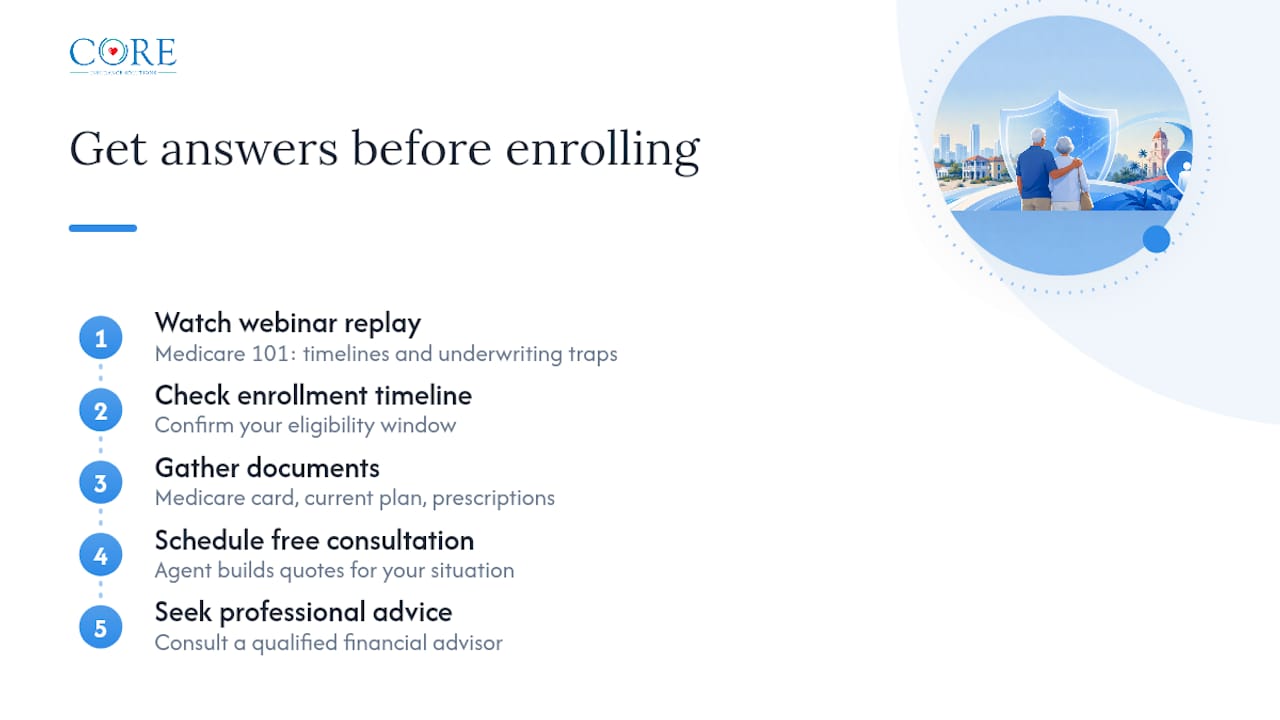
Core Insurance Solutions offers a free Medicare 101 webinar replay that walks through enrollment timelines, the documents you’ll need, and how to avoid the underwriting traps that catch people who enroll outside their window. It’s a good starting point whether you’re turning 65 this year or reviewing a policy you’ve had for a while.
When you’re ready for numbers specific to your situation, a free consultation gets you there faster than shopping rate tools alone. Bring your Medicare card, your current plan information if you have one, and a list of your prescriptions, and an agent can walk you through carrier options, rating methods, and whether Plan G or Plan N actually fits your usage pattern. Start with the Medicare enrollment timeline to confirm where you stand, then schedule a conversation to get quotes built around your actual health picture rather than a generic average.
This article is general information, not a substitute for advice from a qualified financial advisor. Consult a qualified financial professional about your own circumstances before acting on anything here.
Sources
- Compare Medigap Plan Benefits | Medicare
- Medicare Supplement Rates (Florida Office of Insurance Regulation)
- 627.674 Minimum standards; filing requirements. — 2026 Florida Statutes


