

Medicare Scams in 2026: Warning Signs and How to Report Them
Yes, Medicare scams are active in 2026, and the fraud networks behind them are more organized than ever. If someone calls asking for your Medicare number, hang up immediately and call 1-800-MEDICARE (1-800-633-4227) or the Senior Medicare Patrol at 1-877-808-2468 to report it.
TL;DR:
- Scammers are exploiting new Medicare cards, prescription rules, and offer unsolicited “free” equipment or tests, often through spoofed calls or robocalls.
- Common scam signs include requests for personal banking details, urgent threats to cancel coverage, and offers to enroll you over the phone.
- Immediately hang up, report the incident to Medicare and authorities, and document details if you suspect or experience a scam.
- Regularly review Medicare Summary Notices for unfamiliar providers, services, or equipment to catch fraudulent charges early.
- Use official contact numbers, enable call blocking, and verify any unexpected calls before sharing sensitive information.
Table of Contents
- Medicare Scams 2026: The Current Threats You Need to Know
- Warning Signs of a Medicare Scam
- What to Do If You’ve Been Targeted or Scammed
- Reading Your Medicare Summary Notices Catches Fraud Early
- Practical Protections That Actually Reduce Your Risk
- Who to Call: Official Medicare Fraud Resources
- Why Local Guidance Still Matters in the Fight Against Fraud
- Get Help Reviewing Suspicious Notices or Planning Ahead
- Sources
Medicare Scams 2026: The Current Threats You Need to Know
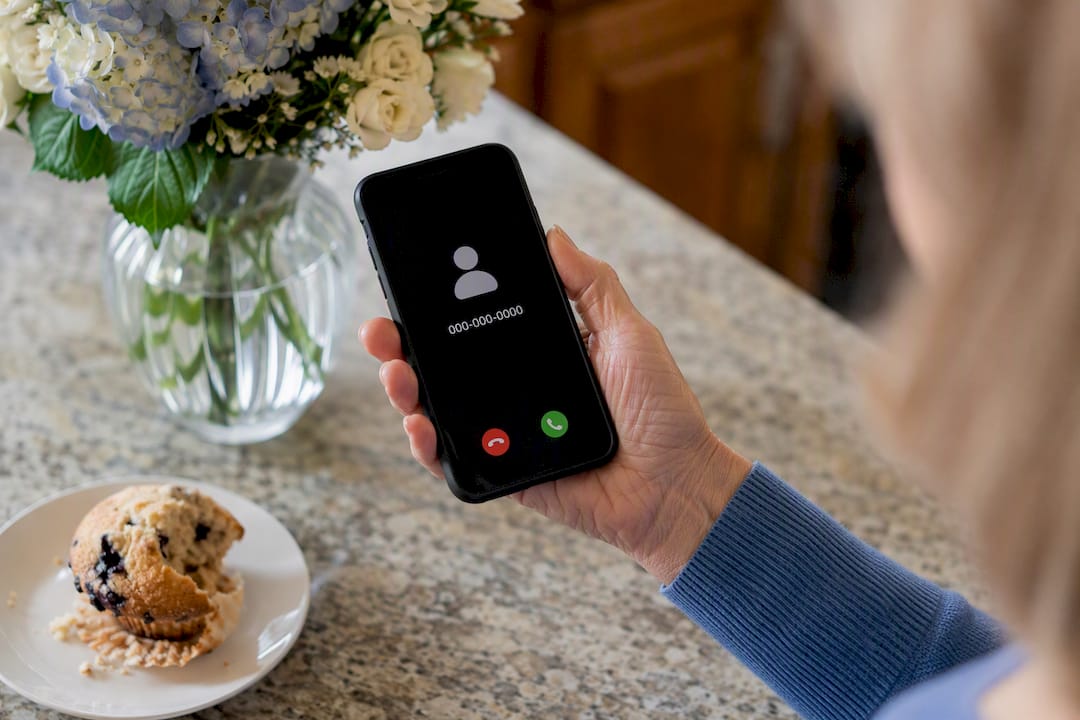
Scammers follow the news, and 2026 gave them plenty to work with. Card replacement scams are surging because some beneficiaries genuinely received new Medicare cards with new numbers in March and April 2026, and fraud rings are exploiting that legitimate mailing cycle by calling people and asking them to “verify” or “activate” their new number over the phone. Medicare never does this. If you get a call like that, hang up and call 1-800-MEDICARE using the number on your card, not the one the caller gives you.
Part D and prescription cap confusion is another opening. Callers claiming to help you “lock in” savings under new prescription cost rules ask for banking details to process a fake enrollment.
Durable medical equipment (DME) and genetic testing fraud remain widespread, often bundled with unsolicited “free” cheek swabs or back braces billed to Medicare without your knowledge. Robocalls with spoofed caller ID, sometimes showing a number that looks like Medicare’s own line, round out the picture.
The scale of this activity showed up clearly in enforcement data. The 2026 National Health Care Fraud Takedown charged 455 defendants and seized more than $182 million in assets, tied to $6.5 billion in alleged false claims across 45 states, much of it running through DME, telemedicine, and genetic testing schemes.
- Card replacement “verification” calls
- Prescription cap savings offers requesting banking info
- Free DME or genetic testing pitches
- Spoofed robocalls impersonating Medicare
Warning Signs of a Medicare Scam
Most Medicare scams share the same handful of tells once you know what to look for.
- A request to “verify” your Medicare number, Social Security number, or bank details. Real Medicare representatives never ask for this over an unsolicited call.
- Pressure to act immediately (“your coverage will be canceled today unless…”).
- Unsolicited promises of free items like braces, genetic tests, or supplies you never requested.
- Threats to cancel your coverage if you don’t comply.
- Callers claiming to be from Medicare using a spoofed local number.
- Offers to enroll you in a new plan over the phone without your having initiated contact.
These patterns match what the National Council on Aging documents as the most common Medicare scam warning signs nationwide. A typical script sounds like: “This is Medicare calling about your new chip card. We just need to confirm your number before we mail it.” The correct response is simple: hang up, then call 1-800-MEDICARE yourself.
Pro Tip: Caller ID can be faked to display “Medicare” or a government-looking number. The only number you should trust is the one printed on your physical Medicare card, never the one that shows up on your phone screen.
What to Do If You’ve Been Targeted or Scammed
Act fast, but methodically. The steps you take in the first hour matter more than anything you do later.
- Hang up immediately and do not provide any additional information, even to “confirm” you’re canceling.
- Write down the date, time, phone number, and exactly what the caller said while it’s fresh.
- Report the call to 1-800-MEDICARE, HHS-OIG at 1-800-HHS-TIPS (1-800-447-8477), and your local Senior Medicare Patrol.
- File a report at Reportfraud if money or personal information changed hands.
- If your Medicare number was compromised, start recovery at IdentityTheft.gov and notify your providers directly, since a stolen number can be used to bill for care you never received. Medical identity theft is not just a financial problem. It can corrupt your actual medical records, which creates real risk of a future clinical error.
- Call local police if money was wired or a card was physically stolen, and notify your plan carrier so they can flag the account.
Reading Your Medicare Summary Notices Catches Fraud Early
Your Medicare Summary Notice (MSN) lists every service billed to your Medicare number in a given period, including the provider name, the date of service, and a billing code. Fraudulent charges often show up as services on dates you don’t recognize, from providers you’ve never met, or for equipment you never received.
Check your MSN every time one arrives, typically quarterly, rather than letting them pile up unread. Keep old notices in a dedicated folder for at least a year so you can compare patterns.
- Look for provider names you don’t recognize
- Flag service dates when you weren’t seen by anyone
- Note any equipment or genetic testing you never requested
CMS and its Unified Program Integrity Contractors already run data analytics that flag unusual billing spikes across the system, and that work has helped prevent an estimated $11.9 billion in potentially fraudulent payments from FY2022 through FY2024. Your review is still the fastest way to catch something that slipped through.
Practical Protections That Actually Reduce Your Risk
A few habits close most of the doors scammers rely on.
- Enable call blocking and spam labeling through your carrier or phone settings; most smartphones now offer this free.
- When a new Medicare card arrives, verify it by calling 1-800-MEDICARE before responding to any related call, and shred your old card once confirmed.
- Never click links in texts or emails claiming to be from Medicare, and disable autofill for any field asking for your Medicare number.
- Caregivers should review MSNs together with the beneficiary each cycle and keep a shared list of trusted phone numbers.
Pro Tip: Write “1-800-MEDICARE (1-800-633-4227)” on a sticky note next to the phone. When a scam call catches you off guard, having the real number in plain sight makes it much easier to hang up and dial the right one instead of getting talked into anything.
Who to Call: Official Medicare Fraud Resources
Different agencies handle different parts of the problem, so knowing which one to call saves time.
- 1-800-MEDICARE (1-800-633-4227): verify benefits, confirm mail, and report suspected fraud directly.
- Senior Medicare Patrol (1-877-808-2468): local, hands-on help reviewing your MSNs and filing complaints.
- HHS-OIG (1-800-HHS-TIPS / 1-800-447-8477): the channel for formal fraud and whistleblower tips.
- ReportFraud.ftc.gov: identity theft recovery and general consumer fraud reports.
Print this list and keep it near your phone or with your Medicare paperwork.
Why Local Guidance Still Matters in the Fight Against Fraud
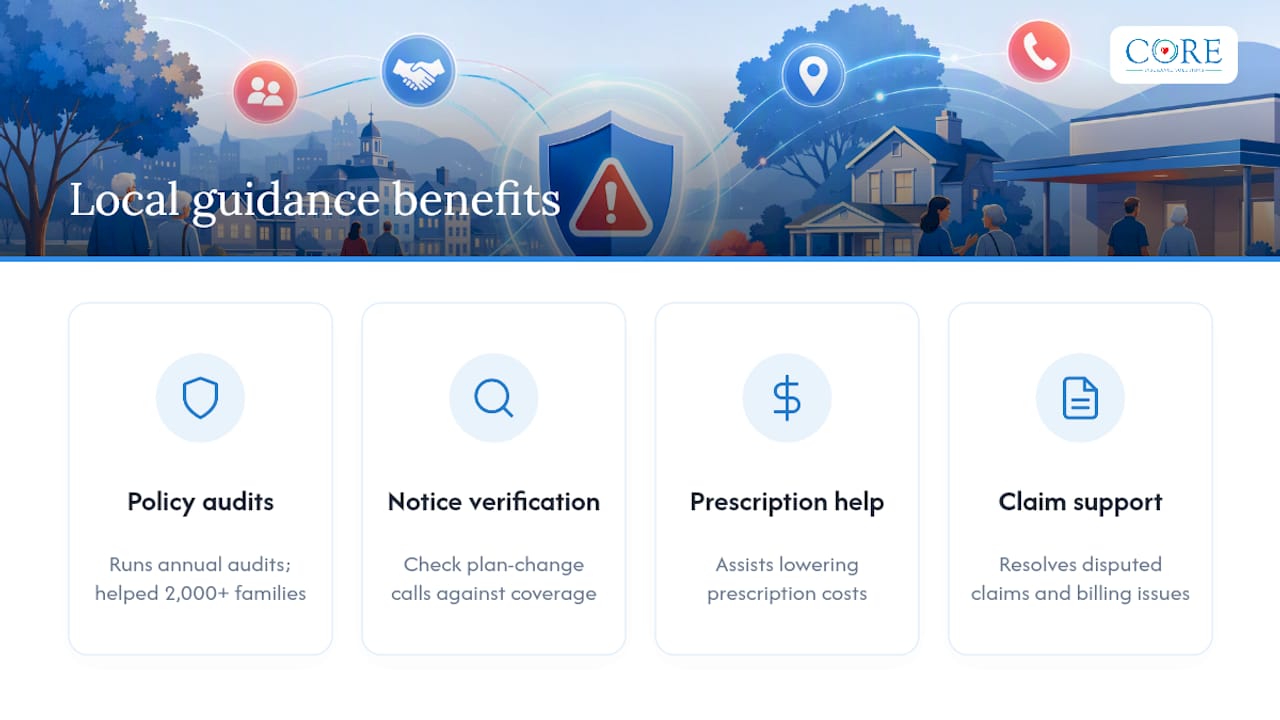
Federal agencies catch a lot of fraud, but they can’t tell you whether the plan-change call you just got is legitimate for your specific coverage. That’s where an agent who knows your policy history earns their keep.
Core Insurance Solutions has helped more than 2,000 families across Central Florida sort through exactly this kind of confusion, running annual policy audits that often surface billing inconsistencies or plan-change pressure before it becomes a real problem. When a client calls unsure whether a notice is real, we can check it against their actual coverage and prescription history instead of leaving them to guess. That kind of second set of eyes, paired with help lowering prescription costs and resolving disputed claims, is part of what a plan review is for.
— Core Insurance Solutions
Get Help Reviewing Suspicious Notices or Planning Ahead
If a Medicare notice or call has you second-guessing yourself, you don’t have to sort it out alone. Core Insurance Solutions gives Central Florida seniors something the scam hotlines can’t: someone who already knows your plan, your prescriptions, and your coverage history, so a suspicious notice gets checked against your actual policy instead of a generic script.
Watch the free Medicare 101 webinar replay to learn how to read your notices and spot red flags before they cost you money, or schedule a local consultation to have your current plan reviewed line by line. Families from Lakeland to Winter Haven and Bartow already rely on this kind of annual checkup to catch problems early. If you’d rather start by understanding your options, browse Medicare Advantage plans or check Part D prescription plans in Lakeland to see what a properly matched plan looks like.
Sources
Keep these on hand so you’re never scrambling when something looks off.
This article is general information, not a substitute for advice from a qualified financial advisor. Consult a qualified financial professional about your own circumstances before acting on anything here.


