

U.S. Medicare: 60 Lifetime Reserve Days: 2026 costs and when to use
Lifetime reserve days are a one-time bank of 60 extra Medicare Part A hospital days you can draw on after day 90 of a benefit period. They don’t cost you anything: Medicare picks up most of the bill during those days, but you owe a steep daily coinsurance for each one you use. Once all 60 are gone, they never come back, and the specific 2026 dollar amounts you’re on the hook for are below.
TL;DR:
- Lifetime reserve days are limited to 60 uses over your entire life, and they only apply to inpatient hospital stays beyond day 90 of each benefit period.
- In 2026, using a reserve day costs $868 per day, which is double the $434 coinsurance for days 61 through 90, and unpaid beyond day 150.
- You can opt out of using reserve days during a hospital stay by filing a written election; hospitals are required to notify you when approaching day 90.
- Once all reserve days are exhausted, Medicare covers no additional inpatient costs beyond day 150, making careful planning essential to avoid high expenses.
Core Insurance SolutionsGet Personalized Medicare GuidanceCore Insurance Solutions helps Lakeland seniors compare Medicare options, manage prescription costs, and receive support with claims.Explore Medicare guidance
Table of Contents
- How Do Lifetime Reserve Days Work Within a Benefit Period?
- What Do Lifetime Reserve Days Cost in 2026?
- Can You Choose Not to Use Reserve Days?
- What Happens When Your Reserve Days Run Out?
- Do Lifetime Reserve Days Apply to Skilled Nursing Care?
- How a local Medicare insurance brokerage can help with reserve day planning
- Get One-on-One Help Planning for Long Hospital Stays
- Sources
- FAQ
How Do Lifetime Reserve Days Work Within a Benefit Period?
A Medicare benefit period starts the day you’re admitted as an inpatient and ends once you’ve gone 60 days in a row without inpatient hospital or skilled nursing care. Each benefit period gives you 90 regular inpatient days. Once you burn through all 90, you don’t automatically lose coverage. That’s where lifetime reserve days step in.
Reserve days kick in only after day 90 of a benefit period, and Medicare draws on them automatically unless you’ve filed paperwork saying otherwise. You don’t have to use all 60 in one hospitalization. You can split them across several long stays over your lifetime, spending 10 during one benefit period and saving the rest for a future one.
The catch: this pool is finite and nonrenewable.
- You get a total of lifetime reserve days for your entire life on Medicare, not per benefit period.
- They only apply to inpatient hospital care, defined by Medicare.
- Once used, they’re gone. There’s no annual reset, no renewal, no second chance.
That nonrenewable feature is the whole reason planning matters here. Spend them carelessly during a stay that Medigap or another payer could have covered, and you may have fewer reserve days left when a future hospitalization needs them.
What Do Lifetime Reserve Days Cost in 2026?
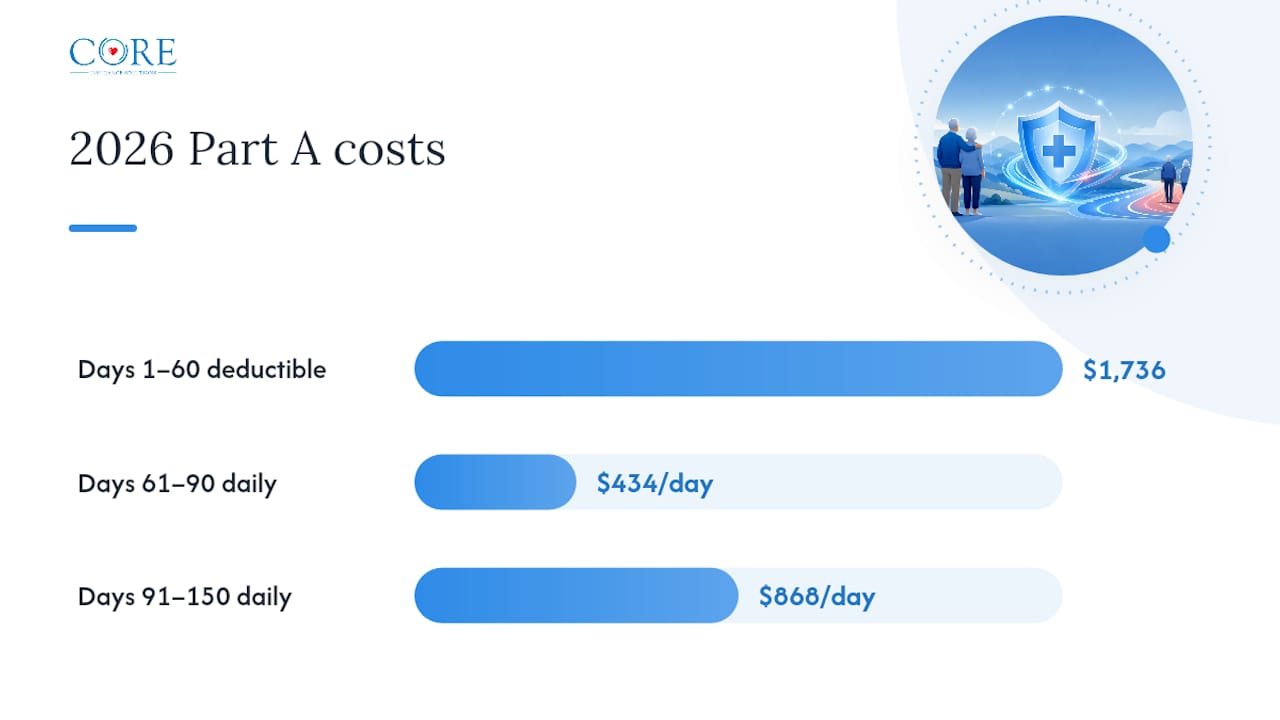
For calendar year 2026, the Part A inpatient hospital deductible is $1,736. That deductible covers your first 60 days of an inpatient stay in a benefit period, once you’ve paid it. Days 61 through 90 carry a daily coinsurance of $434. If you move into lifetime reserve days, the price jumps again: $868 per day, according to the Federal Register’s CY 2026 inpatient hospital deductible and coinsurance schedule. CMS confirms these same 2026 figures in its own fact sheet on Part A and Part B costs.
Pro Tip: The coinsurance for lifetime reserve days is exactly double the deductible amount. That’s not a coincidence. It’s a statutory formula, so when the deductible rises, both coinsurance tiers rise with it.
| Stay length | What you pay |
|---|---|
| Days 1–60 | $1,736 deductible |
| Days 61–90 | $434 per day |
| Days 91–150 (using lifetime reserve days) | $868 per day |
| Beyond day 150 (reserve days exhausted) | You pay all costs |
A single 150-day hospitalization that draws on all 60 reserve days could leave you owing tens of thousands of dollars in coinsurance alone, even with Medicare paying the rest.
Can You Choose Not to Use Reserve Days?
Yes. You can file a written election with the hospital saying you don’t want lifetime reserve days applied to a particular stay, and hospitals are required to notify patients approaching day 90 that this option exists, per CMS’s Medicare Benefit Policy Manual guidance on hospital notice requirements. There’s also a “deemed election” rule under 42 CFR § 409.61: if a hospital’s average daily charges are low enough that using your reserve days wouldn’t actually save you money, Medicare may treat you as having declined them automatically.
Retroactive elections are possible too, but only with the hospital’s agreement, and typically before the claim has been fully processed.
- Ask hospital billing or the discharge planner for the lifetime reserve day election form as you approach day 90.
- Confirm in writing whether you’re electing to use or decline the days for that specific stay.
- Keep a copy of every form you sign; billing systems apply reserve days automatically if no election is on file.
Pro Tip: If you have a Medigap policy that fully covers Part A coinsurance, declining lifetime reserve days during a stay your supplement will pay for anyway can preserve your bank for a future hospitalization with no other coverage backing it up.
What Happens When Your Reserve Days Run Out?
Once you’ve used all 60 lifetime reserve days across your life, you have no more cushion. Any inpatient hospital days beyond day 150 of a benefit period become entirely your responsibility. Medicare’s coverage stops paying entirely.
That’s a real financial cliff for someone in a prolonged hospitalization, particularly for stroke recovery, major surgery complications, or extended intensive care. A few strategies reduce that exposure:
- A Medigap policy, particularly Plans C, D, F, G, M, and N, typically covers the Part A coinsurance for days 61 through 90 and for lifetime reserve days, which is why reviewing Medicare Supplement coverage before a long stay matters.
- Preserve reserve days when a third-party payer, like a Medigap plan or retiree health coverage, will cover the same days at lower personal cost, an approach Medicareinteractive for beneficiaries weighing when to decline.
- Work with hospital discharge planners early. Moving to a lower level of care sooner, when medically appropriate, avoids burning reserve days unnecessarily.
- Appeal any coverage denial you think is wrong. Claims advocacy can catch billing errors that inflate your coinsurance exposure.
If you’re staring down a stay that’s already eaten through 90 regular days, that’s the moment to call a Medicare advisor, not after the reserve days are spent.
Do Lifetime Reserve Days Apply to Skilled Nursing Care?
No. Lifetime reserve days apply only to inpatient hospital stays. They have nothing to do with skilled nursing facility (SNF) care, which runs on a separate benefit structure entirely: up to 100 SNF days per benefit period, with no coinsurance for days 1 through 20 and a daily coinsurance for days 21 through 100.
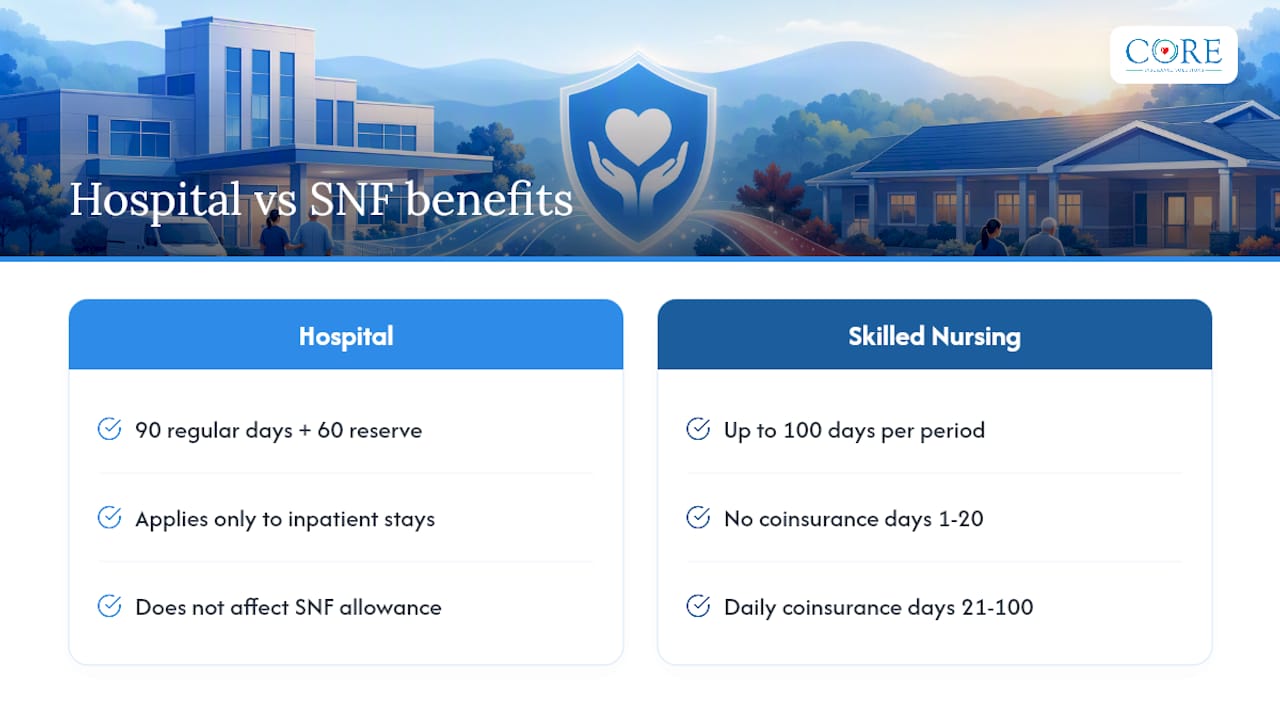
Picture a beneficiary hospitalized for 130 days after a serious cardiac event, using 40 lifetime reserve days along the way. Once discharged to a skilled nursing facility for rehab, that SNF stay draws on its own separate 100 day allowance, untouched by anything used during the hospital stay. The two benefits never overlap, and confusing them is one of the most common mistakes caregivers make when estimating what a long illness will actually cost.
How a local Medicare insurance brokerage can help with reserve day planning
Lifetime reserve days sound simple until you’re the one deciding, mid hospitalization, whether to spend a piece of a pool you can never refill. That’s exactly the kind of decision a Medicare insurance brokerage helps seniors evaluate by providing unbiased carrier comparisons and Medigap guidance to see whether a supplement policy already covers the coinsurance you’d otherwise pay out of pocket.
Situations that typically warrant a call include a hospitalization stretching past 60 days, a denied claim tied to inpatient coverage, or reaching 65 and wanting a policy that handles extended stays before you ever need one. Claims advocacy and annual policy audits are valuable services in these situations.
— Core Insurance Solutions
Get One-on-One Help Planning for Long Hospital Stays
A local Medicare advisor offers personalized review of your medical history and current coverage before recommending anything. That matters most when you’re trying to figure out whether a Medigap plan already protects you from the $868 daily coinsurance on lifetime reserve days, because that answer depends entirely on the specific plan you hold, not a one-size-fits-all script.

Our Holistic Health Needs Assessment and Unbiased Carrier Comparison services walk you through exactly how your current plan handles extended hospital stays, at no direct cost to you. If you’d rather start with the basics first, watch our free Medicare 101 webinar replay or call our Lakeland office to schedule a review before you’re facing a hospital bill instead of a hypothetical one.
This article is general information, not a substitute for advice from a qualified financial advisor. Consult a qualified financial professional about your own circumstances before acting on anything here.
Sources
- Medicare
- Medicare Program; CY 2026 inpatient hospital deductible and coinsurance — Federal Register
- 2026 Medicare Parts A & B premiums and deductibles — CMS
- 42 CFR § 409.61 — General limitations on amount of benefits — e-CFR / LII
FAQ
What Happens If My Lifetime Reserve Days Are Exhausted?
Once all 60 lifetime reserve days are used, Medicare stops paying for any inpatient hospital days beyond day 150 of that benefit period. You become responsible for the full cost of every additional day, which is why preserving reserve days when other coverage can pay instead matters so much.
What Is the Medicare 60 Day Rule?
The “60 day rule” usually refers to the 60 lifetime reserve days Medicare provides for your entire life, used only after you exhaust the 90 regular inpatient days in a benefit period. It can also describe the 60 day gap required to end one benefit period and start a new one with fresh coverage.
What Is the 30 Day Rule for Medicare?
There isn’t a distinct “30 day rule” tied to lifetime reserve days. Coverage moves in set blocks: days 1 through 60, days 61 through 90, then lifetime reserve days after day 90 within a single benefit period.
Does Medicare Pay 100% of a Hospital Stay?
Medicare covers your full inpatient hospital costs for the first 60 days of a benefit period once you’ve paid the 2026 deductible of $1,736.


