
6 Steps to Get CPAP Covered by Medicare for U.S. Beneficiaries
Medicare Part B does cover CPAP therapy for obstructive sleep apnea, but only under specific conditions. Coverage starts with a 12-week trial, requires a qualifying sleep test and documented benefit, and beneficiaries typically pay 20% coinsurance after meeting the Part B deductible once a supplier accepts assignment. Miss the trial paperwork or re-evaluation window, and coverage can stop cold.
TL;DR:
- Medicare covers CPAP therapy only after a qualifying sleep test shows an apnea-hypopnea index of 15 or more, or between 5 and 14 with symptoms or comorbidities, and requires a practitioner’s evaluation before testing.
- The rental period lasts up to 13 months, after which ownership transfers, but interruptions longer than 60 days can reset the rental clock and affect coverage.
- Beneficiaries pay 20% coinsurance after meeting the deductible, but costs increase if suppliers do not accept Medicare assignment or if paperwork is incomplete or delayed.
- The initial three-month trial requires documented benefit, with a re-evaluation between day 31 and day 91, or coverage can be discontinued if improvements are not shown.
- Regular replacement of masks, filters, and supplies is scheduled approximately every three months, with suppliers needing prior contact and documentation of continued necessity.
Core Insurance SolutionsGet Clearer Medicare Coverage GuidanceCore Insurance Solutions compares Medicare options around your health needs, prescription costs, and ongoing coverage concerns.Explore Medicare guidance
Table of Contents
- How Medicare Pays for CPAP: Part B, Capped Rental, and Ownership
- What Sleep Test Results and Paperwork Does Medicare Require?
- What Will a CPAP Cost You Out of Pocket?
- How Long Is the CPAP Trial, and What Happens After?
- How Often Does Medicare Replace CPAP Masks and Supplies?
- A Step-by-Step Path to Getting CPAP Covered
- Core Insurance Solutions’s Perspective on CPAP Billing Risk
- Get Help Reviewing Your Medicare CPAP Coverage
- Sources
- FAQ
How Medicare Pays for CPAP: Part B, Capped Rental, and Ownership
CPAP machines fall under Medicare Part B’s Durable Medical Equipment benefit, and Medicare handles them as capped rental items rather than an outright purchase. That distinction matters for your wallet and your paperwork.
Medicare pays your supplier rental fees for the machine, month after month, for up to 13 months. Once that rental period is complete, you own the equipment outright, according to Medicare.gov. Payment percentages during that window follow a structured schedule set by the DME Medicare Administrative Contractors, with the Noridian capped rental guidance laying out how those monthly payments break down.
A few things shape what you’ll owe and how smoothly the process goes:
- Whether your supplier is a Medicare-participating supplier
- Whether that supplier accepts assignment on the claim
- How consistently you use the machine during the rental period, since interruptions longer than 60 consecutive days can reset the rental clock
Pro Tip: Ask any supplier upfront, “Are you enrolled in Medicare and do you accept assignment?” A supplier who says yes on both counts is your best protection against surprise bills during the 13-month rental window.
What Sleep Test Results and Paperwork Does Medicare Require?
Medicare doesn’t approve CPAP coverage on a hunch. The rules under Local Coverage Determination L33718 spell out exactly what has to happen, in what order, before a machine ships.
- A treating practitioner must complete an in-person clinical evaluation before you take any sleep test. This visit documents your symptoms and clinical history.
- You need a covered sleep test, either a facility-based polysomnogram or an approved home sleep test, showing an Apnea-Hypopnea Index (AHI) or Respiratory Disturbance Index (RDI) of 15 or more events per hour, or between 5 and 14 events per hour paired with documented symptoms like excessive daytime sleepiness or specific comorbidities such as hypertension or a history of stroke.
- Your medical record needs to reflect all of this clearly, since the LCD ties continued coverage directly to documentation quality.
- If you already owned a CPAP before enrolling in Medicare, suppliers can only bill for refills once documentation confirms continued medical necessity within the preceding 12 months.
Timing counts too. The follow-up re-evaluation your practitioner performs has to land between day 31 and day 91 of your trial, not before and not after.
What Will a CPAP Cost You Out of Pocket?
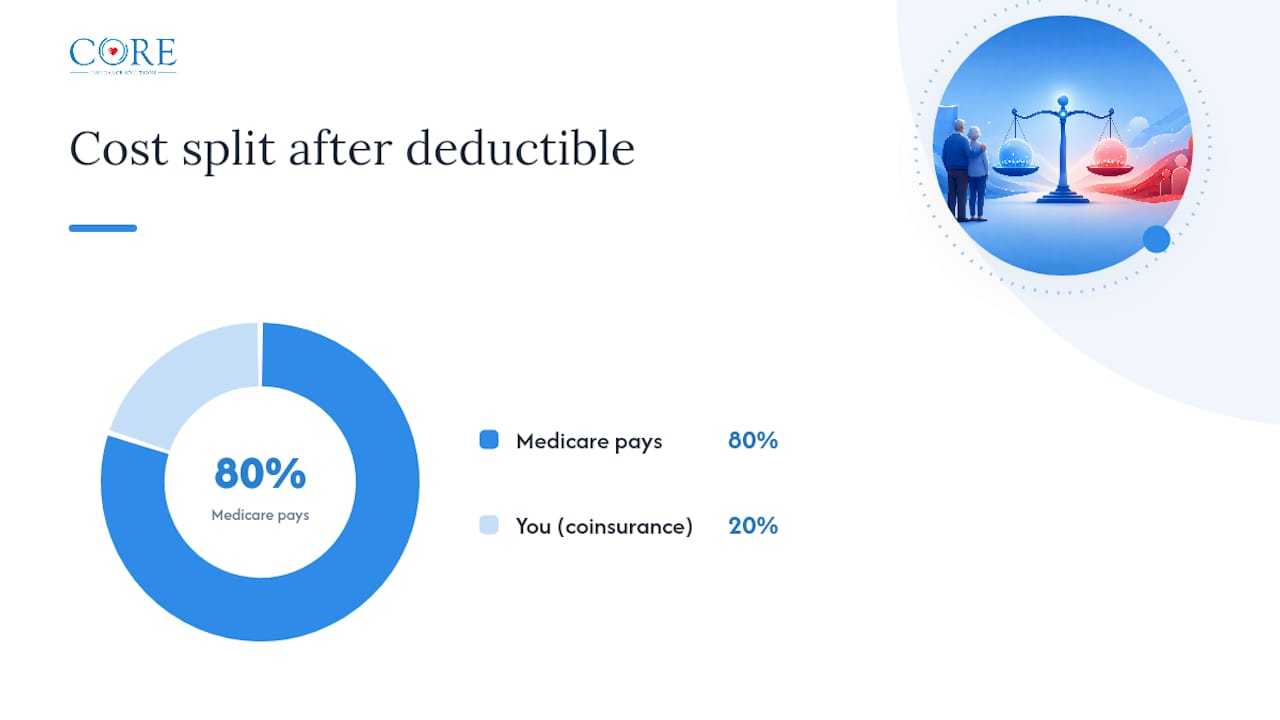
Once you’ve met your annual Part B deductible, Medicare pays its approved amount and you’re responsible for 20% coinsurance on the rest, according to Medicare.gov’s DME coverage page. That’s true for the machine rental and for ongoing supplies like masks and tubing, as long as your supplier accepts assignment.
If your supplier doesn’t accept assignment, the math changes in your favor a lot less. You could end up paying the full charge upfront and filing for reimbursement yourself, often at a lower approved rate than what you actually paid. Rental charges also accumulate over the full 13-month period rather than landing as one lump sum, so a missed payment or lapse in coverage can complicate the total.
Before you sign anything, ask your supplier:
- “Do you accept Medicare assignment on this equipment?”
- “Will you bill Medicare directly, or do I pay first?”
- “How do refills get handled once my mask or filters wear out?”
If you want to see how your deductible and coinsurance stack up against your broader Medicare costs, the Medicare Premium Estimator is a useful starting point.
How Long Is the CPAP Trial, and What Happens After?
Medicare treats your first three months on a CPAP as a performance trial, not a guarantee of ongoing coverage. What happens during those 12 weeks determines everything that follows.
- You start therapy and use the machine as prescribed, ideally most nights, for as much of the night as you can manage.
- Your treating practitioner schedules a re-evaluation appointment sometime between day 31 and day 91.
- At that visit, the practitioner has to document that you’re actually benefiting from therapy, not just tolerating the mask.
- If that documentation is missing, incomplete, or shows you’re not adherent, Medicare can stop paying for the equipment.
Pro Tip: Put a reminder on your calendar around day 45 to schedule that re-evaluation. Waiting until day 85 leaves almost no room for rescheduling if your practitioner’s office is booked out.
How Often Does Medicare Replace CPAP Masks and Supplies?
Medicare’s replacement schedule for CPAP supplies follows fairly predictable intervals, though suppliers can’t just ship them automatically. A full face mask or nasal mask is typically eligible for replacement roughly every three months, while tubing, filters, and headgear follow their own separate cycles based on wear.
Refill rules exist specifically to prevent over-dispensing:
- Suppliers must contact you before sending a refill. They can’t ship on autopilot.
- Contact generally happens no more than 30 days before your current supply is expected to run out, and delivery shouldn’t happen earlier than about 10 days before that point, per the Positive Airway Pressure LCD.
- No single shipment can exceed a three-month supply.
For beneficiaries who owned a CPAP before Medicare eligibility, CMS transmittal 13356 requires suppliers to document continued medical necessity before billing for any accessory refill. Keep a simple log of when you receive new masks or filters. It makes spotting a billing error far easier months later when a statement doesn’t match what actually shipped.
A Step-by-Step Path to Getting CPAP Covered
Getting from “I think I have sleep apnea” to “Medicare is paying for my machine” follows a fairly fixed sequence. Skip a step and you risk a denial you didn’t need.
- See your practitioner in person for a clinical evaluation before any testing happens.
- Complete a covered sleep study, lab-based or home test, and confirm your AHI/RDI meets the threshold.
- Get a written order and confirm your supplier is Medicare-participating and accepts assignment.
- Start your 12-week trial and use the device consistently.
- Attend your re-evaluation appointment between day 31 and day 91, and make sure the practitioner documents your benefit.
- Keep copies of your sleep test report, prescription, supplier order, and re-evaluation note in one folder.
Pro Tip: If a claim or a refill gets denied, you have the right to appeal. Start with a redetermination request through your Medicare Administrative Contractor, and include copies of your documentation folder with the appeal.
Core Insurance Solutions’s Perspective on CPAP Billing Risk
Billing errors on DME claims happen more often than most beneficiaries realize, and a CPAP rental spread across 13 months gives suppliers plenty of opportunities to bill incorrectly. Core Insurance Solutions has seen how a routine annual plan review surfaces exactly this kind of issue: a supplier still billing after ownership transfer, or a plan whose DME coverage would have handled the coinsurance differently.
Claims advocacy isn’t about second-guessing your practitioner. It’s about making sure the paperwork trail matches what Medicare actually requires, so a documentation gap doesn’t turn into a denied claim months down the line.
— Core Insurance Solutions
Get Help Reviewing Your Medicare CPAP Coverage
Some Medicare brokers provide a real, line-by-line look at whether your current plan and supplier setup are actually working in your favor, not just a sales pitch for a new policy.

You can absolutely walk through the checklist above on your own, and plenty of beneficiaries do it successfully without help. But if you’d rather have someone double-check your supplier’s assignment status, confirm your Part B exposure, or push back on a denied refill, that’s exactly the kind of support Core Insurance Solutions provides at no direct cost through its claims advocacy and policy audit services. If you’re also due for your annual coverage checkup, the same conversation can cover your broader Medicare plan review so nothing slips through before your next enrollment window. Reach out to schedule a review of your current setup.
This article is general information, not a substitute for advice from a qualified doctor. Consult a qualified healthcare professional about your own circumstances before acting on anything here.
Sources
- Continuous Positive Airway Pressure (CPAP) therapy
- LCD - Positive Airway Pressure (PAP) Devices for the Treatment of Obstructive Sleep Apnea (L33718)
- 42 CFR § 414.230 - Determining a period of continuous use
FAQ
What Kind of CPAP Will Medicare Pay For?
Medicare pays for a standard CPAP device as capped rental DME once you meet the sleep test and evaluation requirements under LCD L33718. It doesn’t require a specific brand, but the supplier must be Medicare-enrolled and the device must match your prescription.
Will Medicare Pay for a New CPAP Machine After 5 Years?
Yes, Medicare can cover a replacement machine if your practitioner documents continued medical necessity and a new or renewed order supports it. You’ll typically go through a similar documentation process as your original setup, including current usage data.
What Is the Rule About Using CPAP Enough Hours a Night?
Medicare doesn’t publish a single universal hourly rule in its national coverage language, but your treating practitioner has to document that you’re benefiting from therapy at the re-evaluation between day 31 and day 91 of your 12-week trial. Consistent nightly use makes that documentation possible; sporadic use puts continued coverage at risk.
What Does a CPAP Machine Typically Cost With Medicare Coverage?
After your Part B deductible, you generally pay 20% coinsurance on the Medicare-approved rental amount each month for up to 13 months, as long as your supplier accepts assignment. Exact dollar amounts vary by supplier and region, so ask for the Medicare-approved rate before you commit.
Can Core Insurance Solutions Help if My CPAP Claim Gets Denied?
Core Insurance Solutions offers claims advocacy support to help beneficiaries review denied claims and identify documentation gaps. Current details on this service are available through the Core Insurance Solutions services page.


